|
One of the hardest parts of my role is meeting families whose lives have been changed forever by a road death.
No parent expects to outlive their child. No husband, wife, partner, or friend expects a normal day to end with a knock at the door from the police. Yet every day, around five people are killed on Britain's roads, and many more suffer life-changing injuries.
When we talk about road safety, we often focus on speeding, drink and drug driving, mobile phone use and seatbelts. These issues rightly receive attention because they save lives.
But there is another factor that often neglected, the condition of the vehicle itself.
I recently spoke at TyreSafe's national conference, where road safety experts, police leaders and industry professionals came together around a simple message:
Safer vehicles save lives.
Every steering manoeuvre, every emergency stop, every attempt to avoid a collision depends on four contact patches no larger than the palm of your hand.
Yet TyreSafe research suggests that 56.8% of car tyres are at least 4psi below their recommended pressure. An underinflated by just 10% can increase tyre wear by 10% while tyre pressures only 5 psi below the recommended level can increase fuel consumption by around 3%. Collectively, underinflated tyres are estimated to waste more than £1 billion of fuel every year.
But this is not really about fuel. It's about reducing collisions and saving lives.
My message at the conference was simple: vehicle condition is not a compliance issue; it is a casualty reduction community safety issue.
You might have heard about Sir Dave Brailsford who introduced the concept of marginal gains when he was cycling director. He believed small improvements can combine to deliver significant results.
There is rarely one single action that prevents a collision, death or serious injury. Instead, it is a series of small decisions that together make us safer.
-A vehicle that is properly maintained.
-Tyres with good tread and the correct pressure.
-A driver paying attention.
-A seatbelt worn.
Each one may seem insignificant on its own but together, they save lives.
That is why we cannot afford to neglect our tyres. Worn, damaged or underinflated tyres reduce grip, increase stopping distances and make it harder to avoid a collision when every second counts.
Too often defects are only discovered after a serious collision has occurred. When a fatal collision takes place, investigators do not simply examine how a vehicle was driven. They examine whether it was roadworthy, and they examine the tyres.
The good news is that checking your tyres takes just a few minutes. TyreSafe encourages drivers to remember A.C.T.
A – Air Pressure: Check your tyre pressures monthly.
C – Condition: Look for cuts, bulges, cracks and other signs of damage.
T – Tread Depth: Check tread depth regularly and consider replacing tyres before they become dangerously worn.
Most tyre checks take less than five minutes. The consequences of not doing them can last a lifetime. Tyres save lives. Maintenance saves lives. Prevention saves lives. Help us reduce deaths and serious injuries by 65% by 2035 by checking yours and those of your loved ones today. 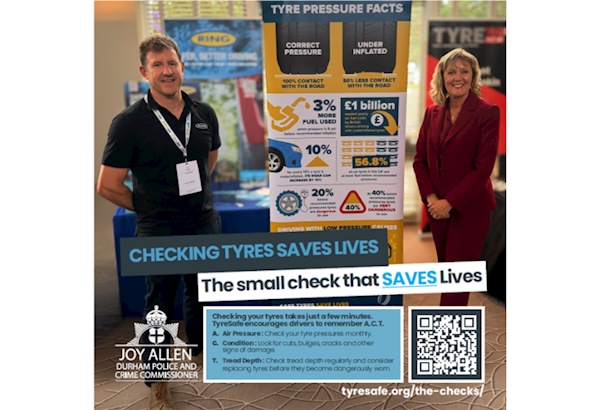
|